Military Support
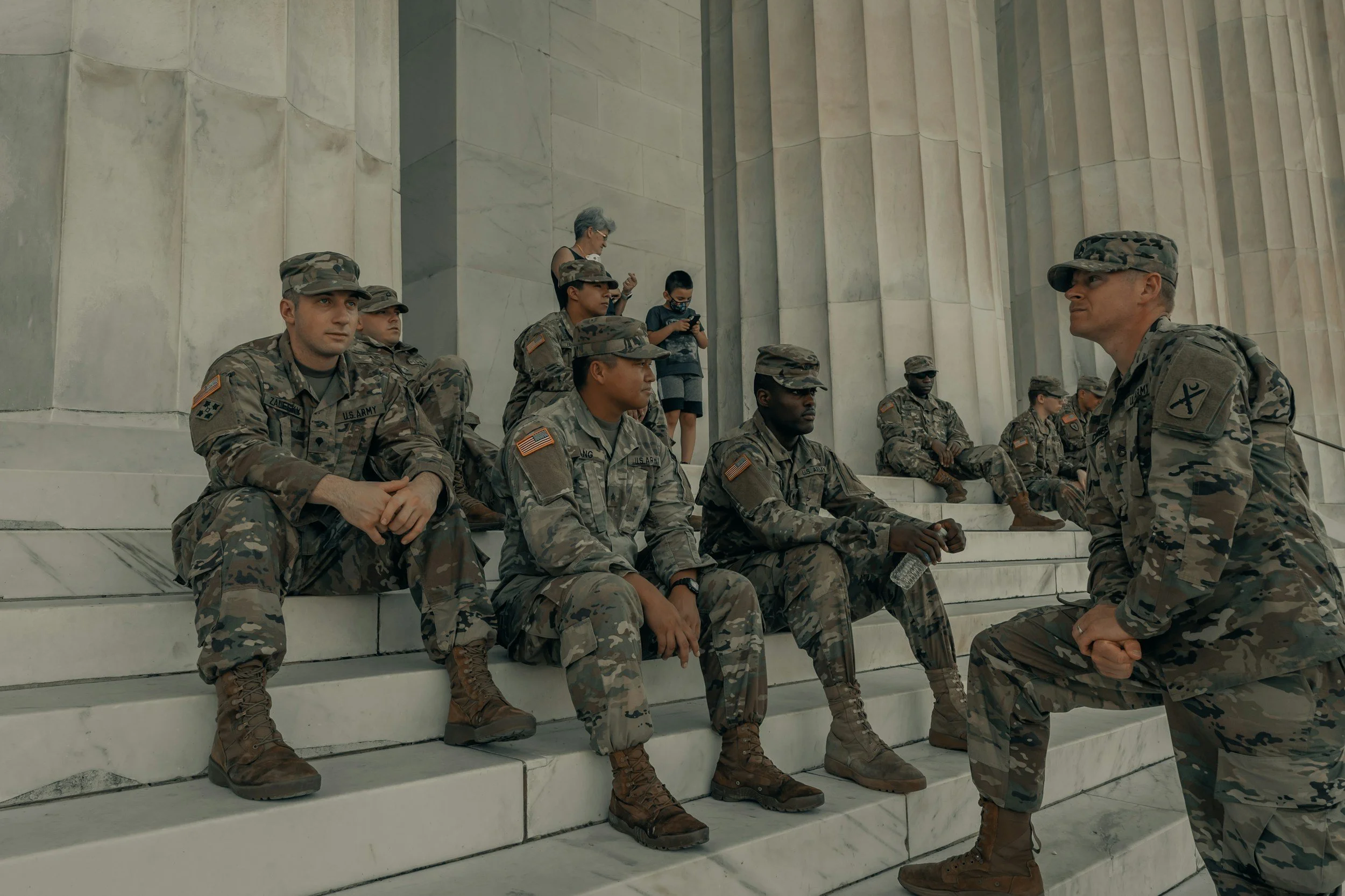
Militaries are built for conflict. What they produce in the process - logistics capacity, aviation assets, engineering capability, medical infrastructure, the ability to deploy thousands of trained personnel to a location within hours - turns out to be exactly what is needed when a disaster exceeds what civilian systems can resource. It is applying its primary capability to a different kind of emergency. The professionals who do this work carry the same training, the same discipline, and the same commitment to mission as those who serve in combat. The mission is different. The standard is the same.
BERLIN, GERMANY * JUNE 26, 1948 - SEPTEMBER 30, 1949
200,000 Flights
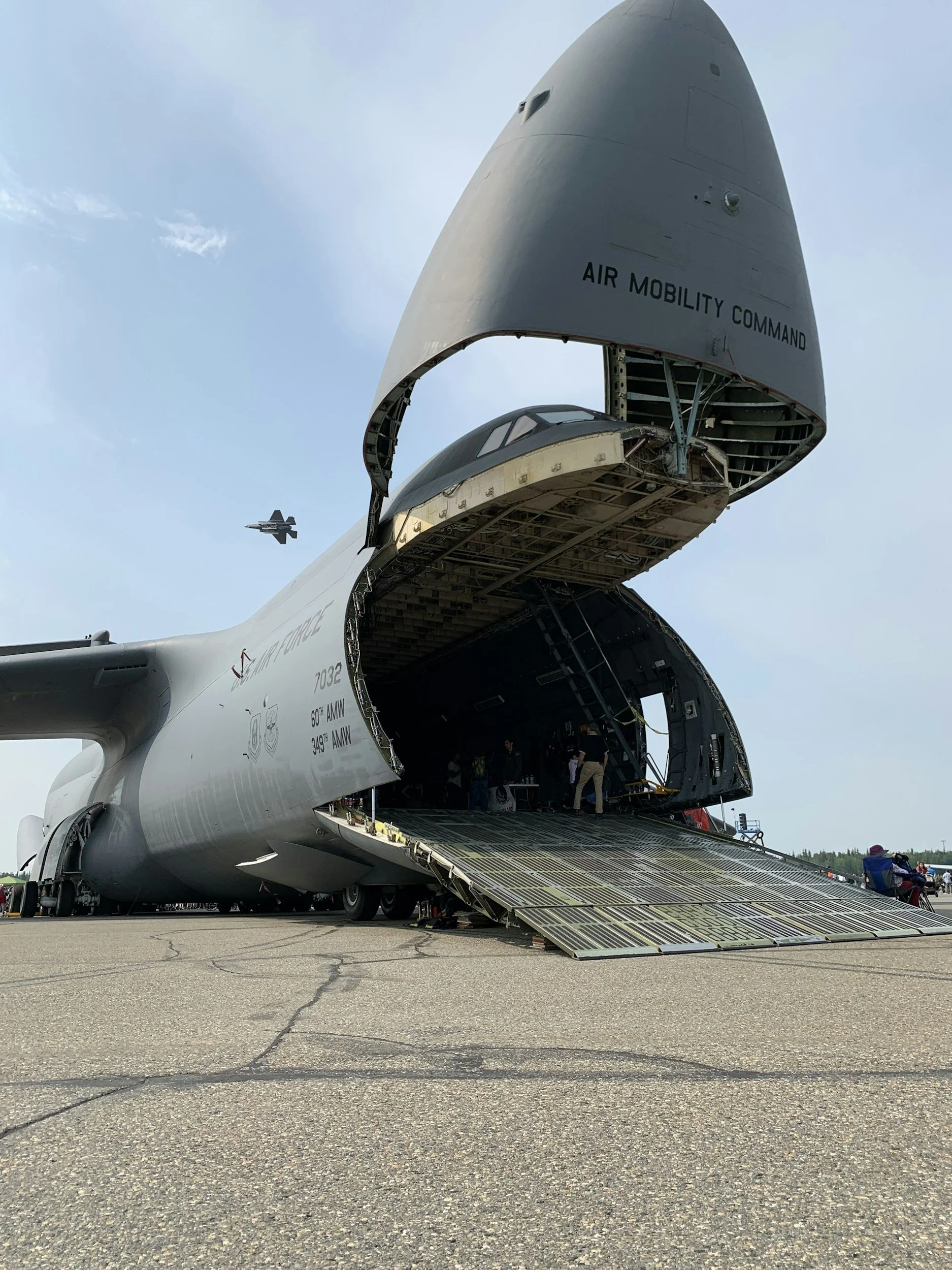
On June 24, 1948, the Soviet Union closed all road, rail, and canal routes into West Berlin. The western sectors of the city, home to approximately two million people, had food stocks for 36 days and coal stocks for 45. The Western Allies had two options: attempt to break the blockade by force, which risked open conflict with the Soviet Union, or supply the city entirely by air. They chose the air.
What followed was the most sustained humanitarian logistics operation in military history. The Berlin Airlift ran for 11 months, operated by the United States Air Force, the Royal Air Force, and the air forces of France, Australia, Canada, New Zealand, and South Africa. At its peak, aircraft were landing at Tempelhof Airport every 90 seconds, around the clock, 24 hours a day. Ground crews turned aircraft around in under 30 minutes. The air traffic control system managing the three air corridors into Berlin was the most complex airspace operation that had ever been attempted.
The logistics behind the airlift were as demanding as the flying. Every calorie consumed by two million people, every ton of coal burned to keep them warm through a Berlin winter, every industrial supply needed to keep the city's economy functioning had to be calculated, procured, packaged, loaded, flown, unloaded, and distributed. The daily tonnage requirement was 4,500 tons. On April 16, 1949, the airlift delivered 12,941 tons in a single day as a demonstration of what the operation had become capable of. The Soviets lifted the blockade the following month.
Thirty-nine Allied airmen died during the airlift in accidents and crashes. No shot was fired in anger. The military capability that kept Berlin alive was not weapons or tactics. It was the disciplined application of logistics, aviation, and organizational capacity to the problem of keeping two million people alive under conditions designed to make that impossible.
The Soviet Union closed the land corridors to West Berlin. Two million people had approximately 36 days of food and 45 days of coal. The pilots, ground crews, and air traffic controllers who kept a city alive for eleven months by air.
Every calorie consumed by two million people had to be calculated, procured, packaged, loaded, flown, unloaded, and distributed. Thirty-nine airmen died. No shot was fired. The military capability that held Berlin was logistics, applied without margin for error, for eleven months.
TONGA * JANUARY 15, 2022
Volcanic Eruption
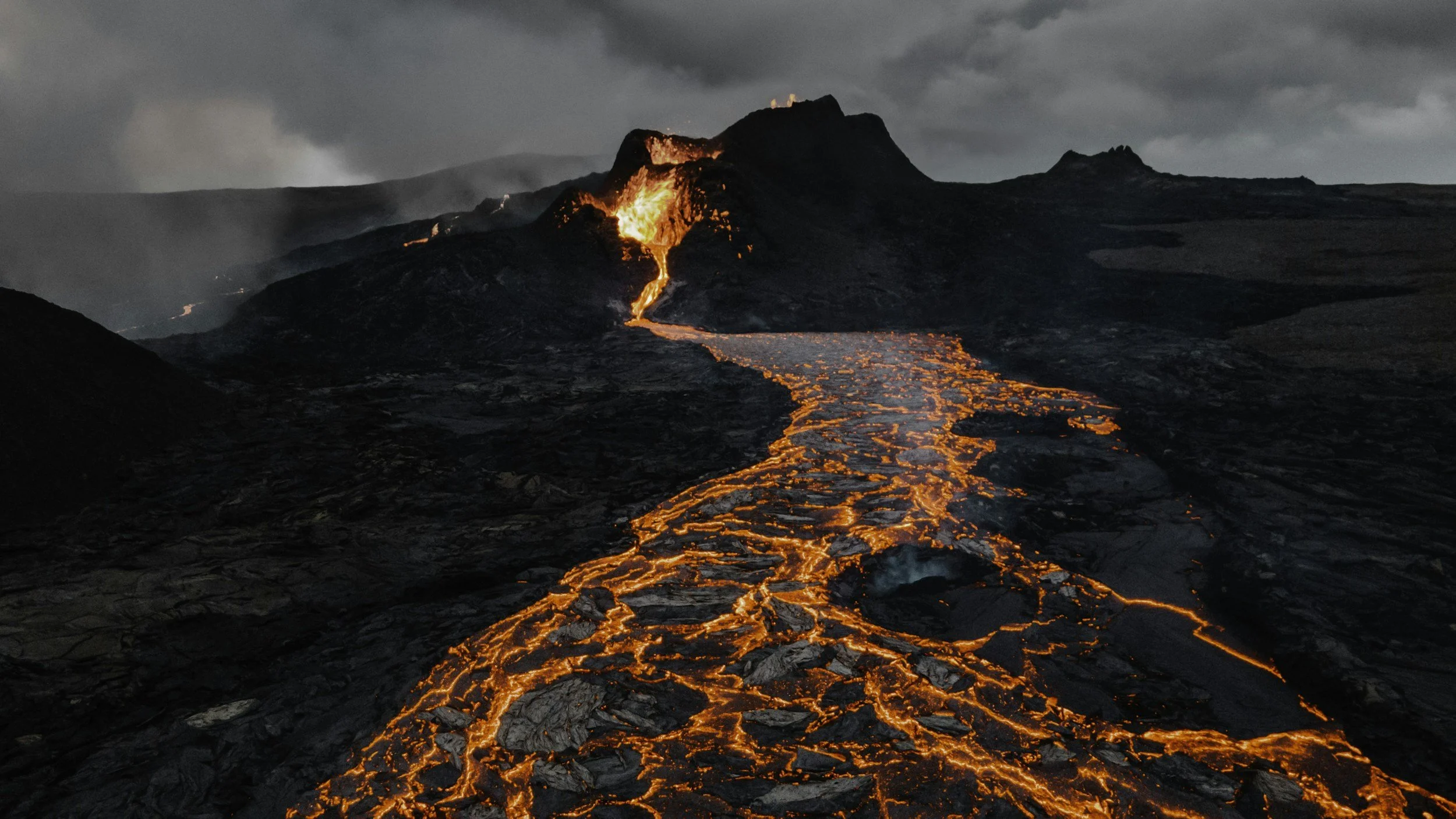
The Hunga Tonga volcanic eruption and tsunami severed Tonga's single undersea communications cable and covered the island in ash. The Royal Australian Air Force and New Zealand Defence Force that reached it before any civilian response could be organized, into an airspace they could not communicate with.
At 5:02 p.m. local time on January 15, 2022, the Hunga Tonga-Hunga Ha'apai underwater volcano erupted in what scientists subsequently described as the most powerful volcanic eruption recorded anywhere on earth in more than thirty years. The eruption generated a tsunami that struck Tonga's main island within minutes. The ash cloud that followed reached an altitude of 58 kilometers and covered the island group completely.
Tonga went silent. The eruption had severed the single undersea fiber optic cable connecting the island to the outside world. Satellite communications, already limited, were degraded by the ash cloud. For approximately 72 hours, the scale of what had happened on the island and the nature of what was needed were not knowable from outside it.
The Royal Australian Air Force P-8 Poseidon maritime patrol aircraft that conducted the first reconnaissance flight over Tonga did so into airspace it could not communicate with, over an island covered in ash, to establish the ground truth that no other source could provide. The images and assessment that flight produced were the first reliable information about the extent of the damage that reached the international response community.
Australian and New Zealand military ships and aircraft were the first significant external response assets to reach Tonga, carrying fresh water, supplies, and assessment teams. The logistics of the response were complicated by the ash covering Tonga's runway, which had to be cleared before fixed-wing aircraft could land, and by the need to operate in a manner that minimized COVID-19 exposure risk to a population that had maintained zero community transmission throughout the pandemic.
The military professionals who planned and executed the Tonga response did so against a timeline and an information environment that civilian logistics systems could not have operated in. The reach, the speed, and the self-sufficiency of military assets in the first 72 hours of a major disaster in a remote Pacific island nation are capabilities that exist nowhere else. The Pacific island communities that depend on Australian and New Zealand military response capacity depend on it because no civilian alternative exists at the scale and speed the geography requires.
The first reconnaissance flight went into airspace it could not communicate with, over an island covered in ash, to establish the ground truth that no other source could provide. The military professionals who reached Tonga in the first 72 hours did so with assets and at a speed that civilian logistics systems could not have matched.
EAST TIMOR * SEPTEMBER - DECEMBER 1999
INTERFET
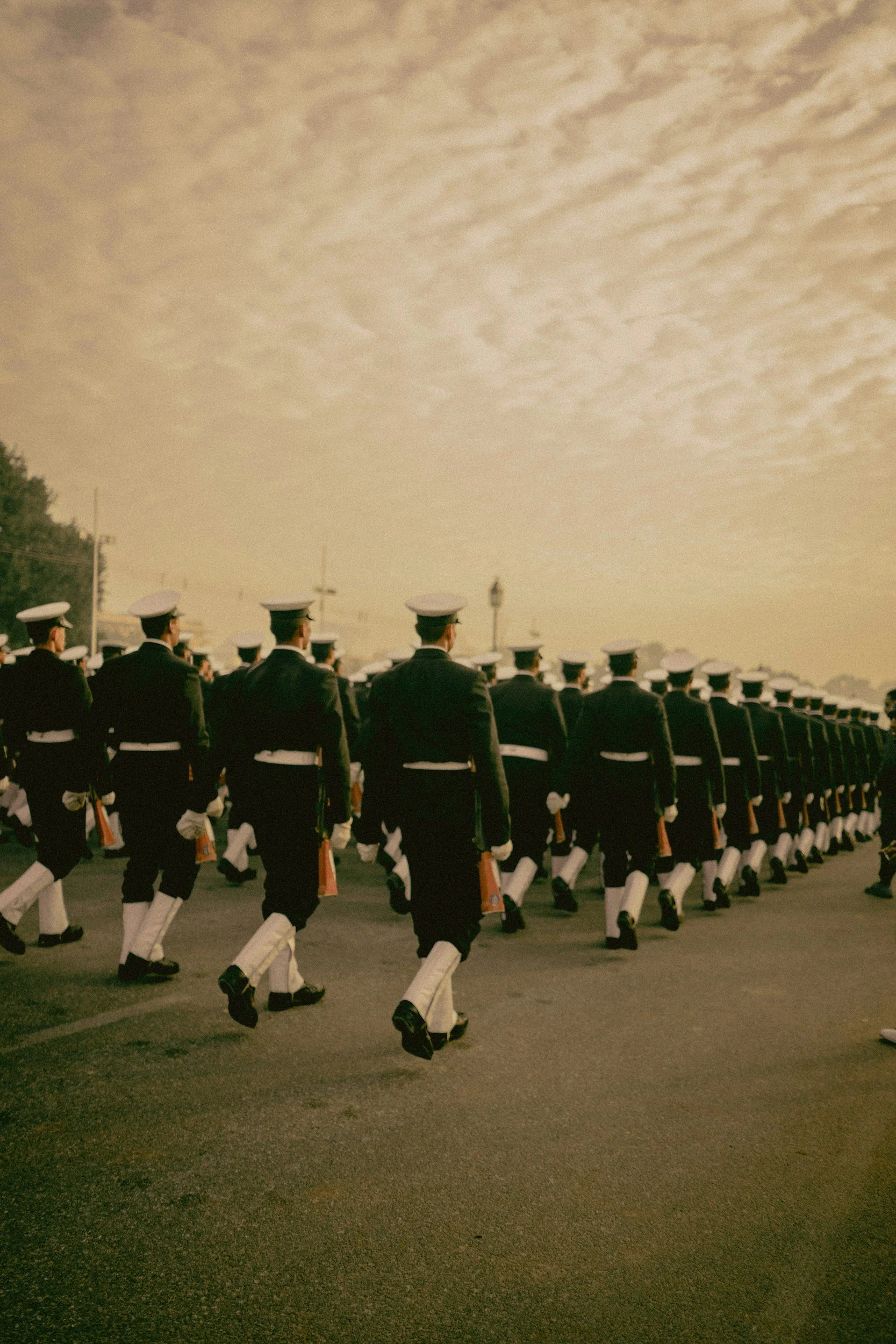
A population being killed following an independence referendum. A multinational military force assembled in weeks. And the Australian-led operation that stabilized a country in collapse and created the conditions for a transition to sovereignty.
On August 30, 1999, the people of East Timor voted overwhelmingly for independence from Indonesia in a UN-supervised referendum. In the days that followed, Indonesian military-backed militia began a systematic campaign of violence against the population. Approximately 1,400 people were killed. 300,000 were displaced. Infrastructure across the territory was deliberately destroyed. The capital, Dili, was burning.
The International Force for East Timor, known as INTERFET, was authorized by the UN Security Council on September 15th and began deploying four days later. It was assembled and operational faster than any previous multinational peacekeeping force in history. Australia led the operation, contributing the largest contingent and the force commander, Major General Peter Cosgrove. Forces from 22 nations ultimately participated.
What INTERFET did in East Timor was create the conditions under which everything else became possible. The violence stopped. The displaced population began returning. Humanitarian organizations that had been unable to operate in an active conflict environment moved in behind the military presence. The reconstruction of the institutions of a new state began. None of that was possible while the militia were operating. INTERFET's presence changed the environment.
The soldiers who served in INTERFET were performing a function that sits at the precise intersection of military capability and humanitarian purpose: using the credible presence of organized armed force to stop violence against civilians, so that the civilian work of recovery could begin. That function has no civilian equivalent. It requires the specific capability that only a military possesses, applied with restraint and discipline toward an explicitly humanitarian outcome.
What INTERFET did in East Timor was create the conditions under which everything else became possible. The violence stopped. The humanitarian organizations moved in. The reconstruction began. None of that was possible while the militia were operating. The soldiers who created that space did so with restraint, toward an explicitly humanitarian outcome.
BERGEN-BELSEN, GERMANY * APRIL 15 - JUNE 1945
Epidemic
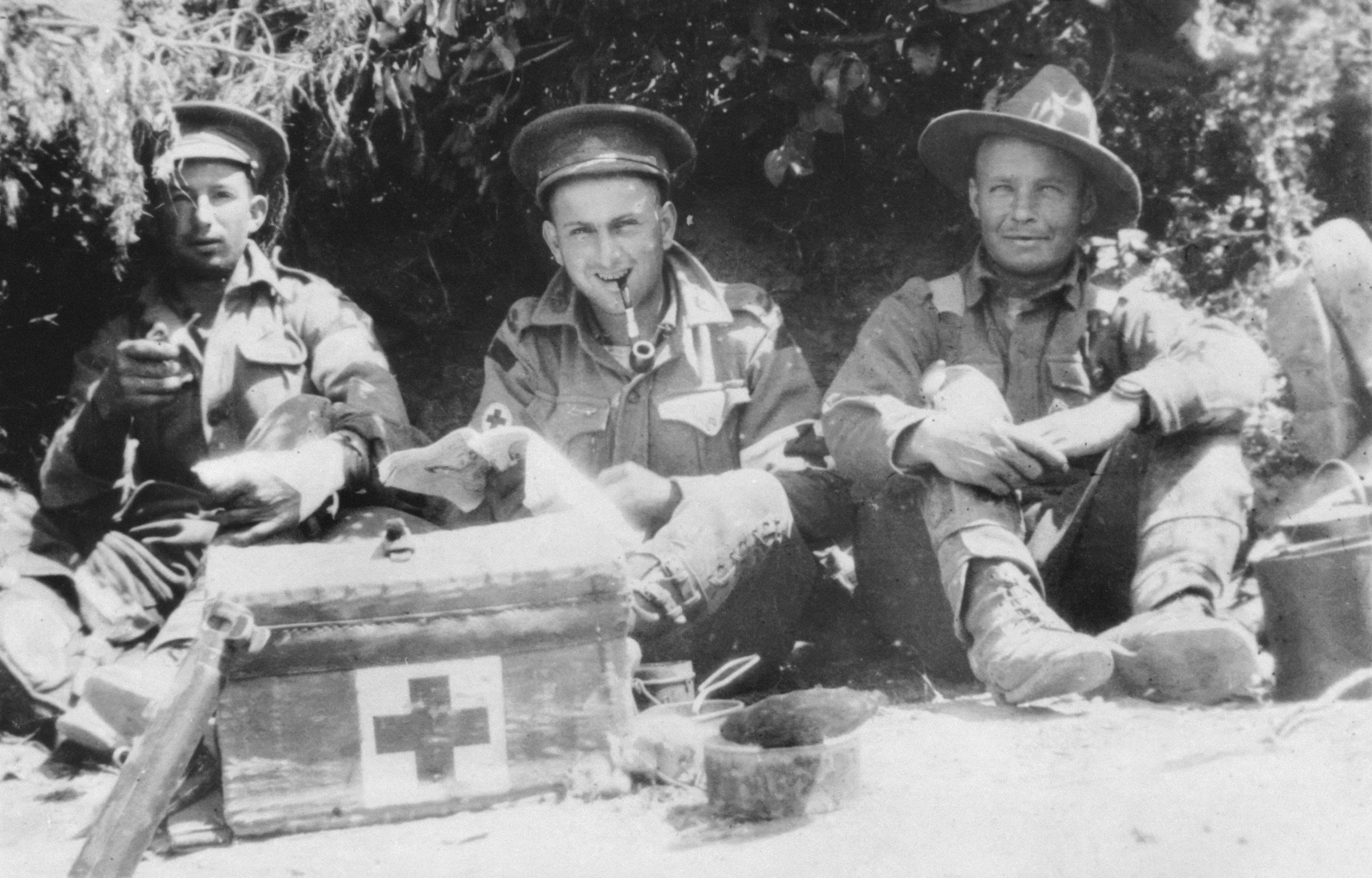
British soldiers entered Bergen-Belsen on April 15, 1945 and found 60,000 prisoners and 13,000 unburied bodies. The military medical personnel who stayed and fought a typhus epidemic in a former concentration camp, with the survival of the living as the only mission.
The British 11th Armoured Division reached Bergen-Belsen concentration camp on April 15, 1945. What they found had not been described in any briefing they had received and could not have been adequately prepared for. Approximately 60,000 prisoners, the majority in acute states of starvation and disease. 13,000 unburied bodies. A typhus epidemic moving through a population with no immune reserve, in conditions that guaranteed its continued spread.
The soldiers who walked through the gates were not medically trained. Their commanding officers made an immediate assessment: the military medical response had to begin before the liberation could mean anything for the people still alive inside the camp. Lieutenant Colonel Mervyn Gonin, who commanded the 11th Light Field Ambulance unit that led the medical response, wrote afterward that nothing in his training or experience had prepared him for what he found or for what the response required.
The medical personnel who worked Bergen-Belsen in the weeks following liberation operated under conditions that had no clinical precedent. Refeeding a severely malnourished population requires specific nutritional protocols because the digestive system cannot immediately process normal food after prolonged starvation. Those protocols were not fully established in April 1945. The medical staff worked from incomplete knowledge, in a former concentration camp with inadequate facilities, against a typhus epidemic that was still spreading, making clinical decisions about 60,000 patients simultaneously.
The typhus epidemic was brought under control. The death rate, which had reached 500 people per day at liberation, was reduced over the following weeks as the medical response scaled up. Medical students from London were flown in. The camp was divided into sections to contain the epidemic. The bodies were buried. The survivors who could be moved were transferred to a nearby military base that was converted into a hospital facility.
The military medical personnel who worked Bergen-Belsen after liberation have received a fraction of the historical attention given to the liberation itself. They stayed after the photographs were taken and the commanders had moved on, doing the clinical work of keeping alive the people who had survived long enough to be found. That work, conducted under conditions of maximum difficulty, with inadequate resources, against a disease that was actively killing the population they were trying to save, is among the most demanding military medical operations ever documented.
The death rate at liberation was 500 people per day. The military medical personnel who stayed after the gates opened brought it down, week by week, treating 60,000 patients in a former concentration camp, against a typhus epidemic, with protocols that had not been written for what they found. They wrote them as they went.
What militaries bring to humanitarian response is not goodwill. It is specific capability: the ability to move large quantities of supplies to inaccessible locations quickly, to operate without external support in degraded environments, to sustain complex operations across weeks and months without the infrastructure that civilian organizations depend on. Those capabilities exist because conflict demands them. They serve humanitarian purposes because disasters create the same demands. The professionals who deploy them understand that the measure of the mission is the same in both contexts. People either survive or they do not.
We Serve Those Who Serve Others.