Non-Public Sector

The government does not have a monopoly on the capacity to respond to crisis. Corporations, nonprofit organizations, foundations, and private citizens hold resources, relationships, and capabilities that public sector systems do not have and cannot quickly replicate. They also operate without the accountability structures that government authority carries. That combination means the non-public sector shapes public safety outcomes in ways that emergency management frameworks were not designed to measure or govern. Sometimes that produces responses that the official system could not have mounted. Sometimes it produces the crisis the official system is then required to contain.
CHICAGO, ILLINOIS * SEPTEMBER 29 - OCTOBER 1982
The Credo

Seven people died after someone laced Tylenol capsules with cyanide. Johnson and Johnson's CEO made a decision the law did not require, the FBI advised against, and that set the standard for corporate crisis response that has held for more than forty years.
On September 29, 1982, a 12-year-old girl in the Chicago suburb of Elk Grove Village died after taking Extra-Strength Tylenol. Within 72 hours, six more people in the Chicago area were dead. The cause was cyanide, introduced into Tylenol capsules by an unknown perpetrator after the product had left Johnson and Johnson's manufacturing facilities. The company was not legally responsible for what had happened. It was not required to do what it did next.
James Burke, Johnson and Johnson's CEO, convened his executive team and placed the company's credo on the table. The credo, written by the company's founder Robert Wood Johnson in 1943, stated that J&J's first responsibility was to the doctors, nurses, and patients who used its products. Burke asked one question: are we living by this? The answer to that question determined everything that followed.
J&J recalled 31 million bottles of Tylenol from shelves nationwide. The FBI advised against it, arguing the recall would cause nationwide panic and reward the perpetrator. The FDA did not require it. The financial cost was 100 million dollars. Burke proceeded. He then went further: J&J cooperated fully with law enforcement, communicated directly and continuously with the public through press conferences that did not minimize what had happened, and redesigned Tylenol's packaging to introduce the tamper-evident seals that are now standard on every over-the-counter medication in the world.
Tylenol recovered 35% market share within eight weeks of relaunching. The decision that Burke made from a credo written 39 years before the crisis arrived turned out to be the decision that saved the brand. That outcome was not guaranteed when he made it. He made it because the credo said to, not because the market research recommended it.
The Tylenol case is studied in corporate crisis management, business ethics, and public health emergency response as the foundational example of what it looks like when a private sector organization places its stated values above its immediate interests at the moment of maximum pressure. The tamper-evident packaging that protects every consumer who opens a bottle of medication today is the physical legacy of that decision. The standard it set for corporate crisis response has held for more than forty years because no subsequent example has surpassed it.
Burke placed the credo on the table and asked one question: are we living by this? The answer determined everything. The tamper-evident seal on every medication bottle in the world is the physical legacy of what that question produced.
UNITED STATES . 1996 - PRESENT
Opioids Crisis

OxyContin launched in 1996. More than 500,000 Americans died of opioid overdoses in the two decades that followed. The public health workers, addiction medicine specialists, and harm reduction professionals who have worked the crisis built by a corporation that knew what it was building.
OxyContin was approved by the FDA in 1995 and launched by Purdue Pharma in 1996 with a marketing campaign built on a claim the company's own research did not fully support: that the drug's extended-release formulation made it less addictive than other opioids. Purdue's sales force was trained specifically to overcome physician resistance to high-dose opioid prescribing. Sales representatives visited doctors' offices with literature, incentives, and talking points designed to expand the prescribing of a drug whose addiction potential the company had documented internally and minimized publicly.
The result was the worst drug crisis in American history. Between 1999 and 2019, more than 500,000 Americans died of opioid overdoses. The crisis did not distribute itself evenly. It concentrated in the communities - rural Appalachia, the post-industrial Midwest, Native American reservations - that had the least capacity to absorb it and the fewest resources to respond. Emergency rooms in small towns that had never managed addiction at scale became the front line of a public health emergency that had been building in pharmaceutical sales data for years before it was visible in mortality statistics.
The public health professionals, addiction medicine specialists, emergency physicians, and harm reduction workers who have worked the opioid crisis have done so against a problem a corporation created, with resources that have never matched the scale of what was produced, in communities whose trust in medical institutions the crisis had already damaged. The harm reduction workers who distribute naloxone, staff needle exchanges, and operate safe consumption sites do so in a legal and political environment that has been hostile to their work, because the alternative to their work is a death toll that continues to rise.
Purdue Pharma filed for bankruptcy in 2019. The Sackler family, which owned the company, received approximately 11 billion dollars in distributions during the years the crisis was building. The public health infrastructure built to contain what Purdue produced was funded by government at a fraction of that figure. The contrast between what the company extracted and what the response has cost is not incidental to the story. It is the story.
The harm reduction workers who distribute naloxone and staff needle exchanges do so in a legal and political environment that has been hostile to their work, because the alternative to their work is a death toll that continues to rise. They are cleaning up what a corporation built, with resources the corporation never provided, in communities the corporation never considered.
HAITI * 1987 - 2022
Community Health
Paul Farmer co-founded Partners in Health with a then-radical idea: that the poor were entitled to the same quality of healthcare as anyone else. He spent thirty-five years proving it was possible. When the 2010 earthquake struck, Partners in Health was already there.
Paul Farmer arrived in Haiti's Central Plateau in the mid-1980s as a medical student. What he found was a population with tuberculosis rates among the highest in the Western Hemisphere, no functioning primary healthcare system, and a prevailing assumption in global health that the standard of care available to wealthy patients in wealthy countries was simply not achievable in places like rural Haiti. Farmer did not accept that assumption. In 1987 he co-founded Zanmi Lasante, which became Partners in Health, on a principle that the global health establishment considered idealistic to the point of naivety: the poor were entitled to the same quality of care as anyone else, and the job was to provide it.
He built a hospital. Then a network of community health workers who extended that hospital's reach into villages that no road connected to it. Then a tuberculosis treatment program that achieved cure rates comparable to those in Boston, in one of the poorest places in the Western Hemisphere, by addressing the social conditions that made treatment failure inevitable if you ignored them. Food insecurity. Housing. Transportation to clinic appointments. Farmer called it accompaniment. The global health establishment called it unsustainable. The patients called it the difference between living and dying.
When the earthquake struck Haiti on January 12, 2010, killing more than 200,000 people and injuring 300,000 more, Partners in Health was already there. With facilities. With trained staff. With supply chains. With community relationships built over two decades. The international response that arrived in the weeks after the earthquake was enormous in scale and limited in reach, because it did not have what Partners in Health had: the trust of the communities it was trying to serve, built over years rather than activated in response to a crisis.
Farmer died in his sleep in Rwanda in February 2022, where he was working. The institutions he built are still operating in Haiti, Rwanda, Lesotho, Malawi, Sierra Leone, Liberia, Russia, Kazakhstan, and Peru. The idea that drove them has influenced global health policy more than any single government program of the last thirty years. He did not wait for a government mandate or a foundation grant or an international consensus that the work was worth doing. He went to Haiti and started.
When the earthquake struck, Partners in Health was already there. With facilities, trained staff, supply chains, and community relationships built over two decades. The international response that followed was enormous in scale and limited in reach, because it did not have what Partners in Health had: trust, built over years rather than activated in a crisis.
NEW YORK HARBOR * SEPTEMBER 11, 2001
Water Evacuation
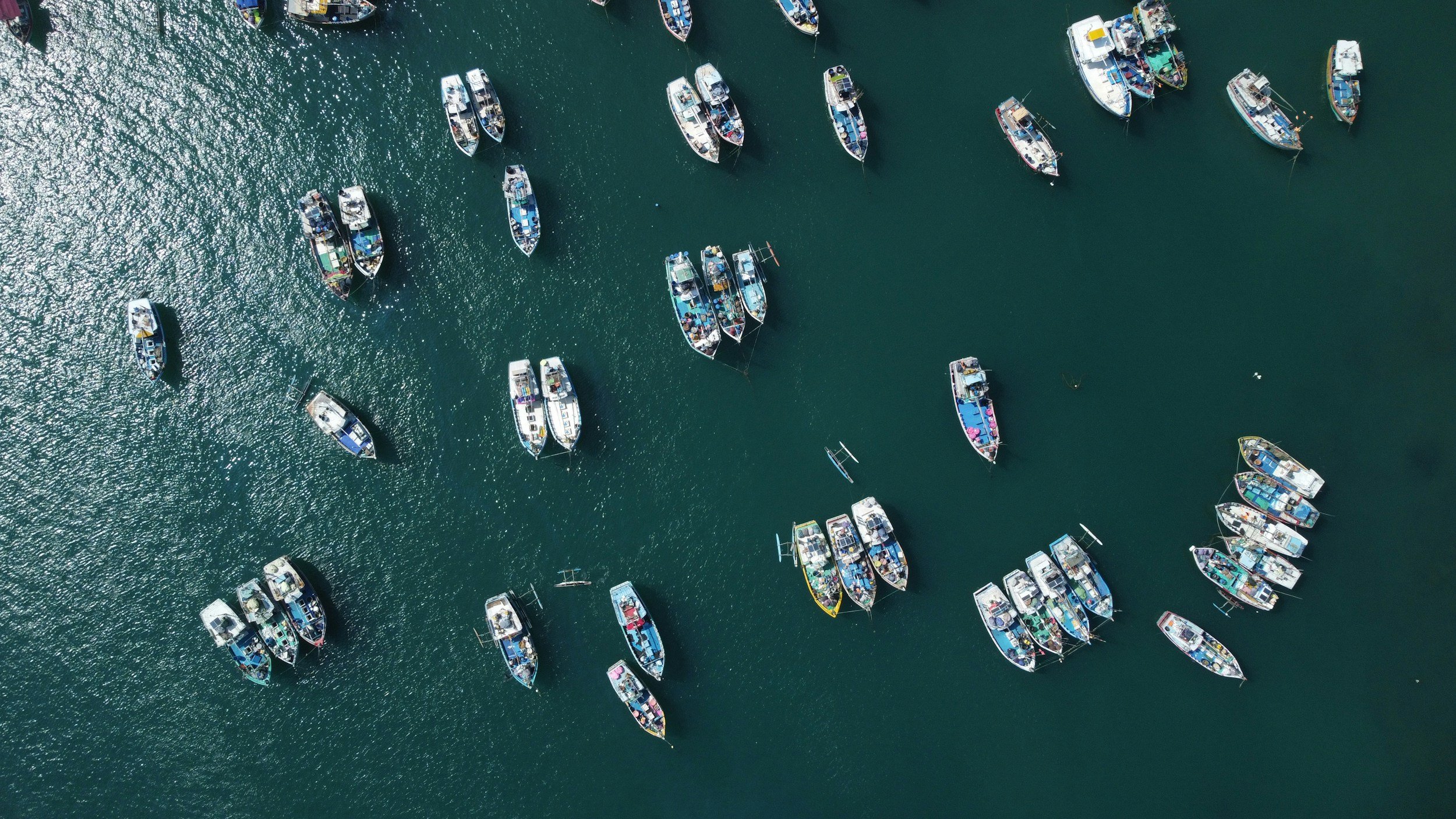
When lower Manhattan filled with people who had no way out, the largest water evacuation in history happened without a government order, without a coordinator, and without a plan. A Coast Guard transmission on a marine radio channel. Half a million people. Nine hours.
By mid-morning on September 11, 2001, lower Manhattan was an island in a way it had not been since it was built. The bridges and tunnels were closed. The subway had stopped. The streets were impassable. Approximately 500,000 people were on the southern tip of the island with no way off it, in a city whose emergency response capacity was overwhelmed and whose transportation infrastructure had been shut down as a security measure.
At 9:57 a.m., the United States Coast Guard broadcast a single transmission on Channel 16, the international maritime distress frequency that every vessel within range is required to monitor: all available boats to lower Manhattan for evacuation. It was not a detailed operational order. It was a call. The captains who heard it understood what it meant.
They came from New Jersey, from Brooklyn, from Staten Island, from up the Hudson River. Ferries, tugboats, dinner cruise vessels, fishing boats, water taxis, private yachts, and working vessels of every description turned toward the smoke. Their captains were not emergency responders. They were working mariners — people who moved cargo, tourists, and commuters for a living — who heard a call on a frequency they monitored because maritime law required it and responded because the need was visible and they had the capacity to meet it.
In nine hours, the mariners who responded to that transmission evacuated approximately 500,000 people from lower Manhattan. They moved more people by water than the Dunkirk evacuation moved in nine days. They did it without a unified command structure, without a coordinating authority telling them where to go or how to load, and without any of them having trained for exactly this scenario. They did it because the call went out and they answered it.
The boat captains who came on September 11th have received a fraction of the public recognition given to the other responders of that day. They are not in the iconic photographs. They did not receive the institutional commemorations. What they did was move half a million people off an island in nine hours, with their own vessels, on their own fuel, because a radio frequency they were required to monitor carried a call they were not required to answer. They answered it anyway.
The captains who came were not emergency responders. They were working mariners who heard a call on a frequency they monitored because maritime law required it and responded because the need was visible and they had the capacity to meet it. They moved half a million people in nine hours. They are not in the iconic photographs.
Private sector capacity, nonprofit infrastructure, and civilian capability are not supplements to emergency management. They are part of it, whether the framework accounts for them or not. The question is not whether they will shape the outcome of a crisis. They will. The question is whether the relationships, the accountability structures, and the coordination mechanisms exist to make that capacity work with the official response rather than around it. Building those mechanisms before the crisis is the work.
We Serve Those Who Serve Others.